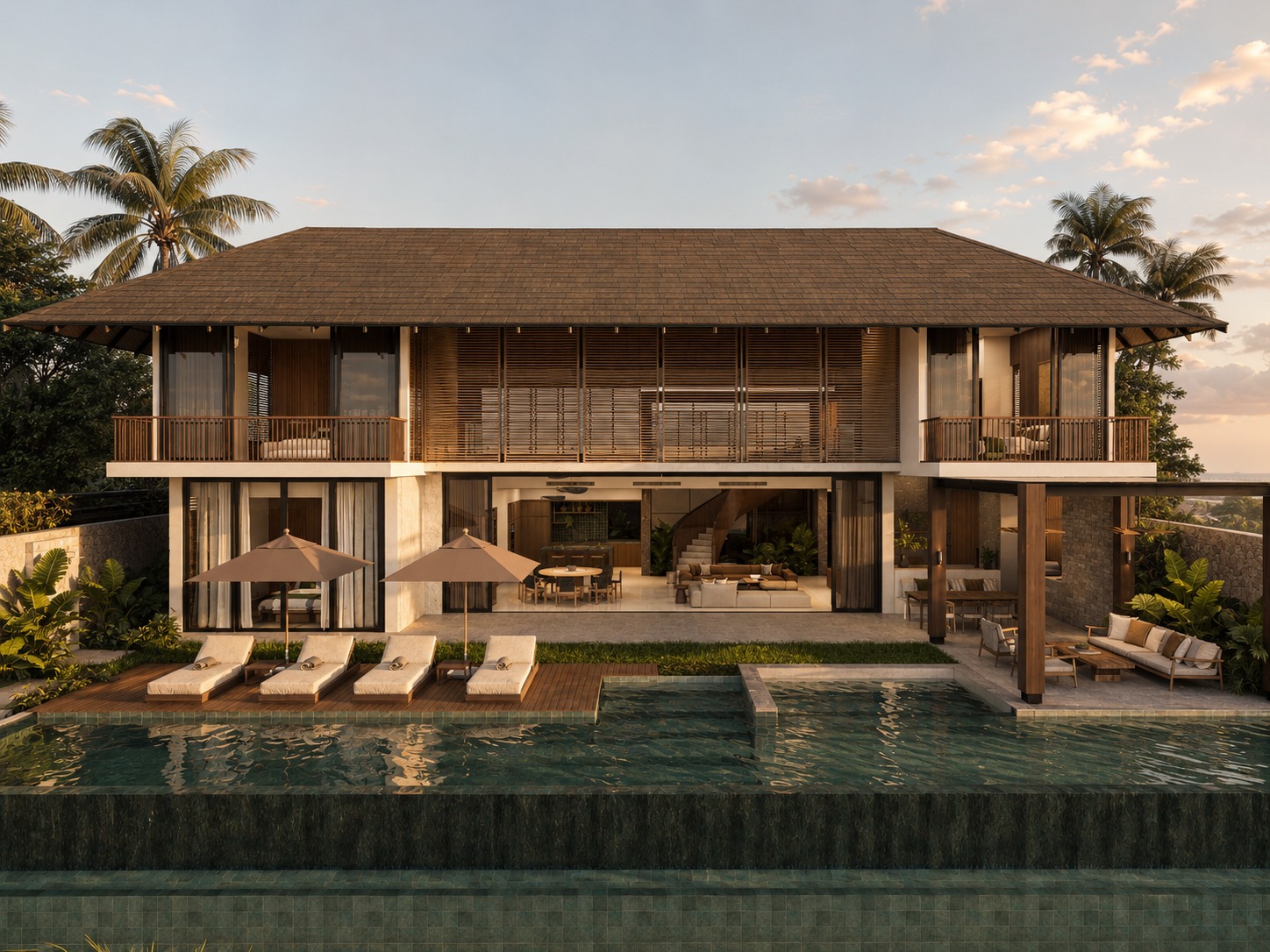
The Villa · West Facade & Infinity Pool
The Investment
Most Bali villa investments follow the same model. Villa Beaux Duin was built on the opposite logic.
The Problem
Most Bali villa investments follow the same model: a developer buys land, builds as cheaply as possible, sells at the highest margin the market will bear, and moves on. The result is a wave of identically-priced, similarly-built villas that compete on rate, depreciate on quality, and rely on lease structures that give away the asset in 25 years.
Villa Beaux Duin was built on the opposite logic.
The Villa · West Facade & Infinity Pool
Ownership
Most foreigners investing in Bali property do so through a leasehold structure, typically 25 to 30 years, with an extension option that is never guaranteed. At the end of the lease, the land returns to the Indonesian owner. Your villa, your pool, your investment, all of it reverts. The extension is a private negotiation, at whatever terms the landowner chooses.
Villa Beaux Duin is structured differently. The property is held through a PT PMA, a fully foreign-owned Indonesian company that belongs to you, holding a Hak Guna Bangunan (HGB) title. This is the strongest ownership structure available to a foreign investor in Indonesia: no nominee arrangements, no lease running down against a private landowner. When you buy, you acquire the company, and with it the villa, the land title, and every licence attached to it.
The Indonesian Buyer Market
Because the villa sits on an HGB title, it is not limited to the foreign investor market. An Indonesian national can acquire the property and convert the title to full freehold (Hak Milik), a permanent family home. Indonesia is the fourth most populous country on earth, with over 280 million people and a rapidly expanding upper-middle and high-net-worth class. The domestic luxury property market is growing at pace, and titled assets in premium locations like Uluwatu are precisely what affluent Indonesian buyers seek. This dramatically expands your exit market when you decide to sell.
Bali's Zone System
Before investing in any Bali property, understanding the zone classification is essential. Bali categorises all land into three zones and the zone determines not just what you can build, but what you can earn.
Land designated for agricultural and cultural preservation. No villa construction is permitted. No short-term rental is possible. This land type does not apply to investment property.
The most common zone for affordable villa developments. Short-term rental is currently permitted but this is changing. As the Balinese government manages over-tourism and protects residential areas, Yellow Zone properties face increasing regulatory pressure. Restrictions on Airbnb and short-term platforms in Yellow Zones are already underway.
Investors who bought here carry a real and growing risk of losing their rental income stream entirely.
Tourism-designated land. Short-term rental is not just permitted it is the intended use of the zone. Regardless of how Bali's rental regulations evolve, Pink Zone properties retain their right to operate commercially.
This is the only zone where your rental income is legally protected long term.
"While Yellow Zone villa owners wait to see what the next regulation brings, Pink Zone owners already know the answer."
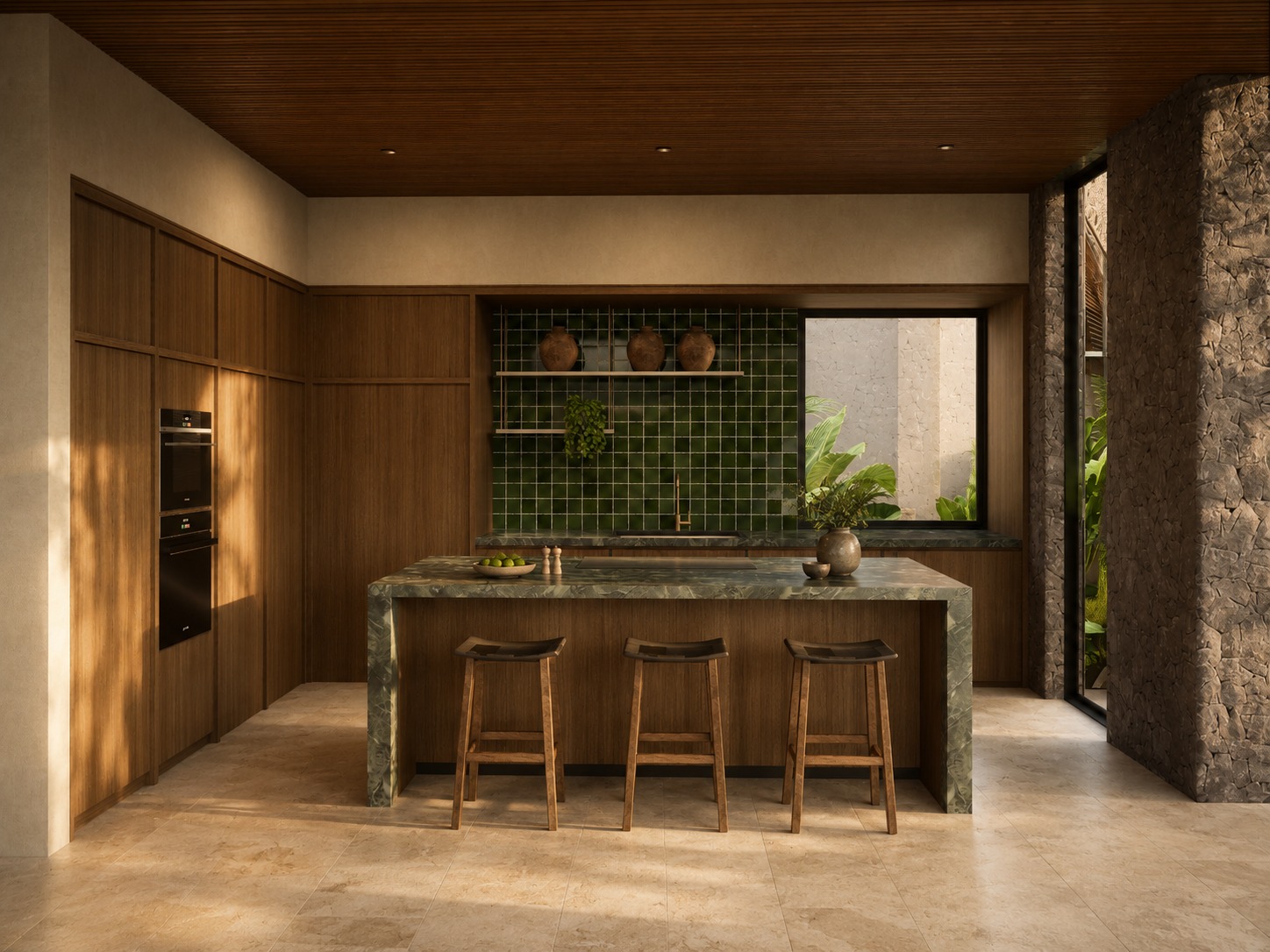
Main Kitchen · Owner-Grade Materials
Close to Cost
In a typical Bali villa development, you pay full price, but you receive a fraction of the value. By the time the property reaches you, the promoter has taken their margin, the contractor has added theirs, and the sales agent, the marketing platform, and the launch campaign have all loaded their costs onto the price. On a $1,000,000 villa, the actual real estate value you are acquiring is often $250,000 to $300,000. You are paying 100 cents on the dollar for an asset worth 25 cents.
Villa Beaux Duin was built by its owner, for its owner. There is no promoter. No launch campaign. No batch of identical units to move. The 750 m² titled land alone is valued at $800,000 USD. The full villa (400 m² of built space, 20m infinity pool, jacuzzi, full wellness complex, four en-suite bedrooms) is offered at $1,400,000.
That puts the entire construction at $600,000 above land value. At owner cost. No one took a cut between the builder and you.
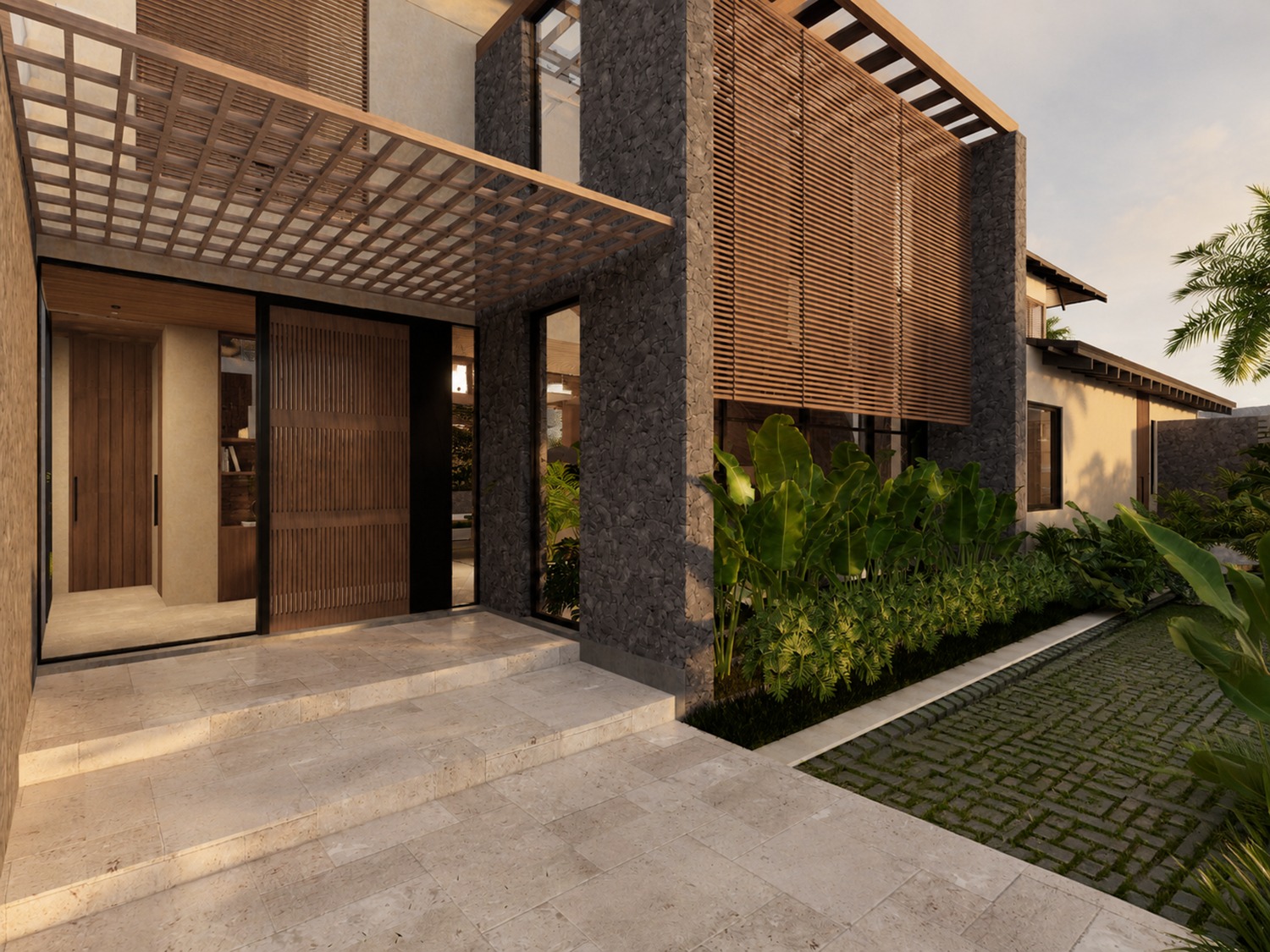
The Entrance · Private Gated Access
The Rental Opportunity
The Bali short-term rental market is saturated at the bottom. There are thousands of villas available at $150 to $300 per night, competing on price, identical in finish, and undifferentiated in experience.
The premium end is a different market entirely.
Guests booking at $600 to $800 per night are not looking for the cheapest option. They are looking for the best option. They want a private wellness facility, a serious pool, a space that feels exclusive because it genuinely is. Supply in this segment remains limited because very few villas in Bali are actually built to this standard.
Villa Beaux Duin targets this underserved tier directly. The gym, sauna, cold plunge, and spa room are not amenities added to justify a price. They are the reason guests book, stay longer, and return.
Return on Investment
Villa Beaux Duin is not positioned as a high-yield flip. It is a wealth preservation vehicle with strong rental income, meaningful capital appreciation potential, and a permanent underlying land asset.
| Conservative | Base | Optimistic | |
|---|---|---|---|
| Nightly Rate | $600 | $700 | $800 |
| Occupancy | 70% | 80% | 85% |
| Net Monthly | ~$6,500 | ~$8,700 | ~$10,600 |
| Net Annual | ~$78,000 | ~$105,000 | ~$127,000 |
| Net Yield | ~5.6% | ~7.5% | ~9.1% |
After all taxes, management and operational expenses. Net multiplier: 52% of gross revenue.
These figures represent rental income alone. They do not account for capital appreciation on a fully owned asset in one of Asia's fastest-growing luxury destinations or the permanent land value of $800,000 USD that anchors the investment floor.
Why Uluwatu, Why Now
Bali welcomed 6.3 million international visitors in 2024, recovering strongly to pre-pandemic levels with further growth projected through 2025 and beyond. Tourism infrastructure is expanding. Airline connectivity is increasing. Demand for premium accommodation continues to outpace supply.
While Canggu and Seminyak have become saturated, Uluwatu–Melasti is rapidly emerging as Bali's next luxury epicentre. High-end beach clubs, international resort brands, and a discerning traveller profile are concentrating here. Supply of genuinely premium property remains constrained which is exactly when the best entry points exist.
The dominant Bali villa model affordable build, promoter margin, leasehold structure has flooded the market with product that competes on price alone. Villa buyers and renters who want genuine quality have very few options. Villa Beaux Duin is designed specifically for that gap.